

Love is an Active Noun

“Love isn’t a state of perfect caring. It is an active noun like struggle. To love someone is to strive to accept that person exactly the way he or she is, right here and now.” – Mr. Rogers
Connecting as a Couple During COVID-19: Communicate with Tech
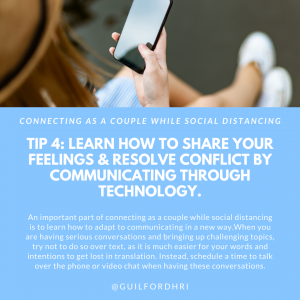
Learn how to share your feelings and resolve conflict by communicating through technology. An important part of connecting as a couple while social distancing is to learn how to adapt to communicating in a new way. Because you may not see each other in person very often, it is crucial to be able to share your feelings and be vulnerable over the phone. When you are having serious conversations and bringing up challenging topics, try not to do so over text, as it is much easier for your words and intentions to get lost in translation. Instead, schedule a time to talk over the phone or video chat when having these conversations.
By being intentional and addressing you and your partner’s emotions – both the fears and joy – you can build intimacy and overcome challenges, which will build a strong foundation for your relationship to grow and thrive!
Connecting as a Couple During COVID-19: Find Things You Can Do Together While Apart

Find things you can do together while apart. It’s important to find ways to spend time together while you are apart to continue to build and strengthen your relationship. Although you are not physically together, there are many great ways to spend time together and create shared experiences from afar. Here are some things that you and your partner can do to build connection and spend time together while social distancing:
- Watch a movie or TV series together. You can do this by watching the same thing while on a video call. There are also apps and websites such as Rabbit, which allow you to watch a movie or TV series with another person through the app/website. This is a great way to share your interests and stay connected with your partner!
- Read the same book. If you both like to read, you can take turns choosing a book to read at the same time. As you read, you and your partner can have conversations about the book you are reading, which can help you feel more connected and have fun while apart!
- Plan a video chat date night! A great way to spend time together while social distancing is to plan date nights over video chat, such as FaceTime or Skype.
- Find online games you both like to play. If you and your partner enjoy video or computer games, a great way to spend time together and feel more connected is by playing multiplayer games together, while talking on the phone.
- Listen to music together. Another way you and your partner can connect and spend time together is to share your favorite music with each other. You can create playlists for one another to listen to, helping you learn more about your partner and feel closer to one another.
We encourage you to try out some of these suggestions or to find other shared interests and activities that you can do together while you are apart!
Connecting as a Couple during COVID-19: Focus on Quality Communication

Focus on quality communication. Because you may not be able to see each other as often as you would due to social distancing, it’s important to set aside time to talk. Though texting is a quick and easy way to stay connected with your partner throughout the day, we encourage you to spend time calling or video chatting for more quality communication that fosters intimacy and connection. When you are talking with your partner, be sure to try your best to stay in the present moment and make the most of your time together.
Keep in mind that quality communication does not mean you always need to have serious conversations. It may look like video calling while you cook dinner or watch the same movie. Sometimes, just being connected while doing simple tasks that you would normally do together can help you feel closer and build intimacy.
Quality communication may also look different for each couple. A good rule to follow is to communicate as much or as little as you need to feel connected. Some couples may need to talk every day, while others may feel more comfortable with less frequent communication. Talk to your partner and figure out what works best for both of you to feel like your needs are being met in the relationship.
Some little things you can do to promote connection and communication while social distancing include sending one another messages of gratitude, sending “good morning” and “good night” texts, and texting each other things you love about one another.
Connecting as a Couple During COVID-19: Adapt Your Perspective

Be willing to adapt your perspective on what dating and connection look like. Connecting while social distancing can feel daunting, and it’s normal to feel scared or worried about what this means for your relationship moving forward. However, it’s important to remember that your perspective and attitude can greatly impact how you and your partner approach and navigate this new phase of your relationship.
We encourage you to shift your perspective and view social distancing as an opportunity to strengthen your relationship and grow closer with your partner. When you look at social distancing as something that can lead to a healthier and happier relationship, you will feel more motivated to do the work necessary for your relationship to thrive. Maintaining a more positive outlook will also help you overcome and grow stronger through the challenges you face.
Connecting as a Couple While Social Distancing

We’ve had to make a lot of adjustments in our lives and adapt to some pretty big changes over the past couple of weeks due to the COVID-19 pandemic, and this includes how we connect as couples and navigate the dating world. With social distancing, self-isolation, and self-quarantine become key components in slowing the spread of coronavirus, dating looks a bit different right now. Whether you just started seeing someone or have been in a relationship for a while now, the current circumstances can make it challenging to connect as a couple in the ways that we are used to. If you’re struggling with this, know that you are not alone in this, and it’s normal for us to be feeling unsure of how to connect in this new world of social distancing.
Social connection with our loved ones is so important as we move through life with these recent changes, so we’ve developed a series of tips to help couples connect with one another in new ways during this time of social distancing!
Connecting with Teens: Be Honest About Your Feelings
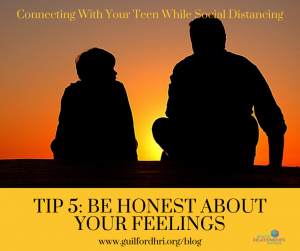
Oftentimes, as parents, we try and shield our teens from our worries or anxieties to help protect them from further stress. However, by being honest about your own feelings and concerns about the COVID-19 pandemic, you are creating a space in your home for open communication. Further, you are modeling for your teen that you are moving forward and adapting to the current changes in lifestyle, despite any concerns you may have about it all.
The reality is that teens are likely to have heard a lot about COVID-19. They are old enough to watch the news or go online, and they’ve probably helped you prepare for the possible quarantine by helping with younger siblings or helping to shop for supplies. By refraining from talking openly with your teen about your perspective, you are cutting off a line of communication that is useful in times of high stress and possibly inducing more stress due to the unknown.
You can let your teen know how you feel without inducing more panic, such as by expressing your feelings about your worries or emotions in a rational way. One way to balance this is by making clear and concise statements and following up with how you plan to cope. For example, you can say, “I am very worried about keeping our family business throughout all of this, but we will continue to work hard to keep things as stable for the family as we can.” Parents who are anxious about the uncertainty can say something like, “I’m very anxious about everything we do not know, but I am trying to stay informed by getting information from credible sources and taking care of my mental health.”
Supporting teens through the coronavirus pandemic is a new challenge for all of us, but by showing your teen that they are not alone in their emotions, you can help to stay connected during an uncertain time.
Connecting with Teens: Communicate Openly & Honestly

Many of us may be struggling to cope with the uncertainty and the changes that the COVID-19 pandemic brought to us all. Teenagers who were planning for proms, graduations, study abroad experiences, and memories with their friends, are now losing many of these milestones that they work so hard to achieve. A future with endless opportunities is now uncertain, and many teens will need help to navigate their emotions throughout it all. The more you emerge as someone who they can talk to freely and openly, the more connected you will be throughout it all.
One way to provide your teen with the space to communicate openly and honestly is to ask them open-ended questions about how they are coping with it all. HRI has many conversation starters in our Parenting Teens toolkits that can help spark engaging discussions with your teens, as well as give you both an opportunity to get to know one another better.
An important part of open communication is attentive listening. HRI provides guidance on how to listen actively to others at this link. In addition to attentive listening, it is important to refrain from overly emotional responses to the things they say. As parents of a teenager, your poker face is crucial to establishing open and honest communication. Attending to your nonverbal and verbal responses when communicating with your teen will ensure that they feel comfortable being honest about their thoughts and feelings.
Giving your teen the space to communicate openly and honestly about their feelings will help them stay emotionally balanced and healthy and will give both of you an opportunity to connect. However, it is important to be aware of how you respond to ensure that you do not inadvertently close off lines of communication.
Connecting with Teens: Help Them Stay Connected with Friends

This may sound counterintuitive for parents wanting to spend more time with their teens during social distancing. However, helping your teen stay in touch with their friends shows them that you are supportive of the things that are important to them and helps them maintain some stability when things are changing every day.
For many teens, the COVID-19 pandemic has led to them giving up many milestones, such as prom, graduation, or time spent learning and socializing at school with their friends and teachers. This can lead to increased feelings of stress and anxiety. One of the ways that parents can help is by keeping them connected to their friends throughout these challenging times.
Since most connections can only occur virtually, it’s a great time to be more lenient with technology guidelines in your home. You can even encourage teens to earn more time by working in the yard or helping a younger sibling with their at-home learning. Let them use their extra screen time to organize a group video chat with several friends or watch a movie with a friend using a shared app. Keep in mind that many teens stay in touch with their games through online or video games as well.
Helping your teen stay connected to their social circles while social distancing will strengthen the bond you both share and will help your teen cope during an uncertain time.
Quaranteenagers: Strategies for Parenting in Close Quarters. Retrieved from https://www.nytimes.com/2020/03/19/well/family/coronavirus-covid-teenagers-teens-parents-kids-family-advice.html.