Developed by HRI Program Coordinator, Camila Dos Santos, M.Ed.
Tip 5: Seek professional help before the stress becomes overwhelming.
Oftentimes, people will wait until a problem becomes a crisis before getting professional help, but it’s important to remember that most mental health professionals are equipped to help people get through crisis situations, as well as to help people prevent them in the first place. Learning coping strategies for anxiety or conflict resolution strategies for your relationship from a professional, for example, can help you to reduce stress overall in your life.
Getting help before a small issue becomes a crisis can help you not only deal with stress during tough times, but it can also help you strengthen your relationship with yourself and others.
Developed by HRI Program Coordinator, Camila Dos Santos, M.Ed.
Tip 4: Remember it’s okay to rely on your support system to help you get through tough times.
It is human nature to avoid asking for help. Combine that with a society that tends to stigmatize vulnerability, and many of us end up shutting out our loved ones when we are going through a difficult time. Ironically, this can only make tough times tougher.
Instead of shutting them out, try reaching out and sharing your feelings with someone you trust. They may be able to offer a different perspective or comforting words, and you may end up finding that support from a loved one is exactly what you needed to overcome a difficult moment.
Reaching out to people that we love and trust for support can help to reduce stress and to feel supported during tough times.
Developed by HRI Program Coordinator, Camila Dos Santos, M.Ed.
Tip 3: During tough, stressful times, go back to the basics such as drinking water and staying active.
When things get challenging, taking care of our basic needs can reduce stress and help to find the balance in our emotions and thoughts. Consistently drinking water, eating well, and staying active can help us begin to feel better and see things more clearly. While doing these things may seem simple, they often get overlooked when we are highly stressed or dealing with difficult circumstances. During tough times, going back to the basics is sometimes exactly what is needed to cope with stress.
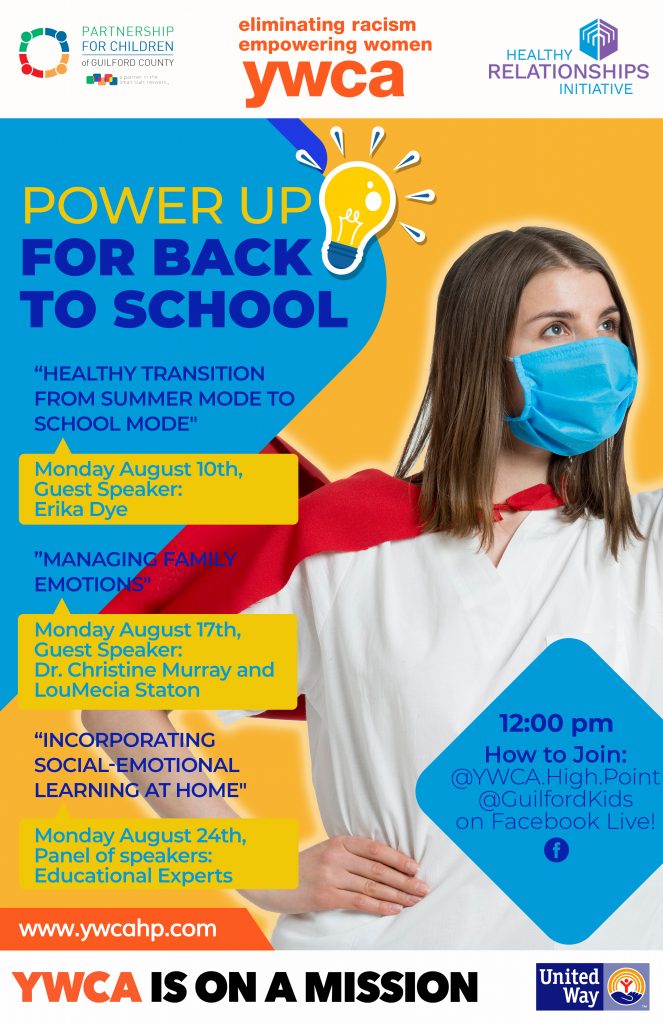
Going back to school in the midst of a pandemic can be stressful on the entire family. We’re partnering with several local organizations (DYEnamic Instruction, Guilford County Partnership for Children, United Way, YWCA High Point) to offer a 3-program series supporting families as they transition from summer mode to school mode. Join us on Facebook from 12-1 pm on Monday, August 10, 17, and 24, and ask your question live!
Developed by HRI Program Coordinator, Camila Dos Santos, M.Ed.
Tip 2: Find 2-3 routines or practices that comfort you when your emotions are at a high.
When things are tough, it’s important to have a couple of stress-relief practices that comfort you. Whether your go-to is active like kick-boxing or yoga, creative, like painting or restoring a piece of furniture, contemplative such as meditation or journaling, or a combination of these and others, it’s important to know what works for you when things are particularly difficult.
Developed by HRI Program Coordinator, Camila Dos Santos, M.Ed.
During tough times, it can be even harder to cope with the emotional and physical repercussions of feeling increased stress. In this series, we will provide tips to cope with stress during tough times.
Our first tip in our Coping with Stress During Tough Times series is to spend tech-free time outdoors. There are many health benefits to spending time outdoors, including feeling happier and less stressed.
If you decide to spend this time alone, try practicing mindfulness by taking in the sounds and sights around you. If you’re spending time with a loved one outside, you can exercise together or enjoy an afternoon snack or picnic.
Whether you’re alone or in the company of others, avoid bringing your devices. Not only will this help you stay mindful and present, it will also help you stay intentional about using this time to engage in activities that reduce stress and promote emotional balance and wellbeing.
Check out our latest HRI resource: an E-Book on Celebrating Fatherhood!
Fathers play a critical role in their children’s development, and this E-Book is designed to help you celebrate the fathers in your life. Equipped with tips and insights to help the father in your life feel special and appreciated, this free E-Book can be downloaded by clicking here.
This E-book was designed by Bringing Out the Best at UNC Greensboro utilizing resources developed by the Healthy Relationships Initiative.
“To be kind is more important than to be right. Many times, what people need is not a brilliant mind that speaks, but a specialheart that listens.” – unknown
In healthy relationships, kindness and listening are more important than being right. Next time that someone you love talks to you about something you may have disagreed on, give them a listening ear and an open heart, even if you were right about the conflict.
You may find that it’s exactly what your loved one needs in the moment and exactly what is needed to strengthen the relationship.