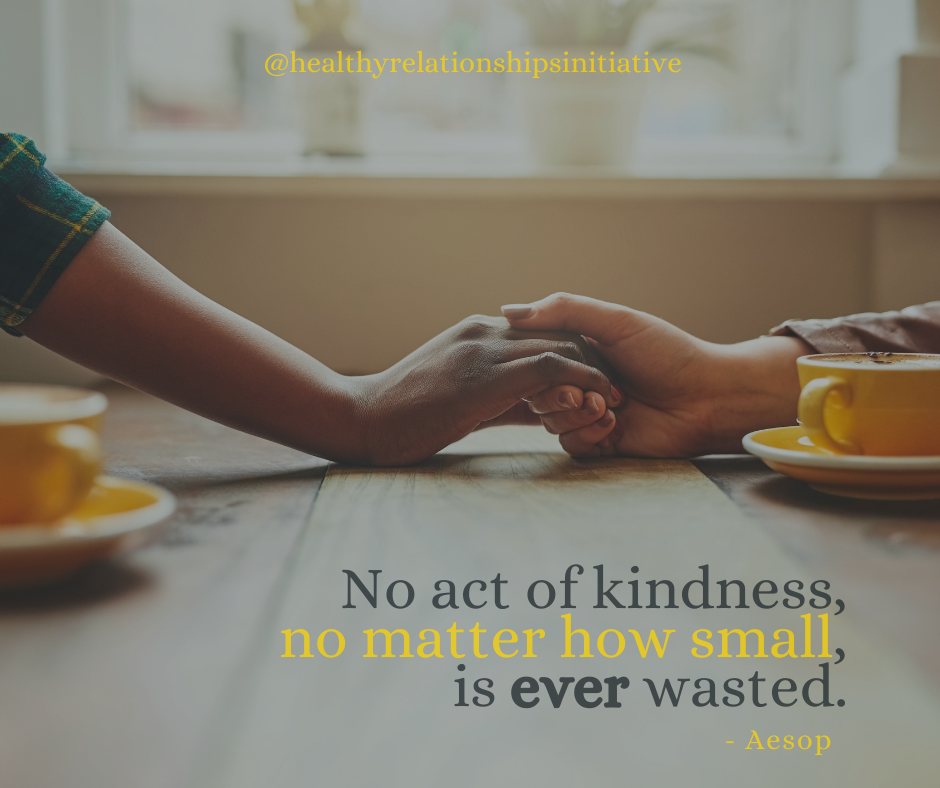
“No act of kindness, no matter how small, is ever wasted.” – Aesop Small acts of kindness can go a long way in showing someone that we care about them.
Take some time today and be intentional about showing kindness to someone that you love.
Cultivating your spiritual life is an important strategy to overcoming loneliness. Whatever that looks like for you – whether that means subscribing to a particular faith and seeking more support within that institution, or whether that means that you choose to explore your spirituality in other ways, such as by creating a vision board that outlines your values and goals in life.
Maybe, for you, a spiritual life includes a combination of those components, but what is most important is that you explore ways to find fulfillment beyond what you are doing on a day-to-day basis and also focus on a bigger perspective when you set your goals and think about how you live your life.
Oftentimes, people who experience feelings of loneliness are stuck in a cycle of perceptions, actions, and idea about their loneliness. It can be difficult to break out of this cycle, especially since our own experiences with loneliness can help to validate the cycle itself.
For example, if you have a negativity bias (“I’m not going to go to that get-together because I never have positive interactions with new people.”), then even if you do go to that gathering, you are more likely to perceive your interactions from a negative lens. This impacts how we interact with others and can impede our ability to connect, further exacerbating our feelings of loneliness.
In order to break out of the loneliness loop, it’s up to us to correct our own negative ideas about our loneliness. Challenging those negative thoughts when they arise is crucial to breaking out of the cycle of loneliness.
Whether you have a toolkit of coping strategies already in place, or whether you need to begin developing that toolkit, when we have “go-to” strategies to overcome difficult emotions, then we are more likely to employ those strategies in times of distress.
Think about what works for you when you are feeling low. Are you someone who enjoys being outside, going for walks and breathing in the fresh air? Or maybe, you prefer to seek out close friends for companionship.
Regardless of what works for you when you are lonely, it’s important to know what that is and employ that strategy as soon as possible into your feelings of loneliness.
It may seem counterintuitive to suggest being alone as a strategy to cope with and overcome loneliness but getting comfortable with the idea of being alone can actually help in overcoming loneliness.
Learning to enjoy your own company makes it easier to overcome those feelings of loneliness that people can sometimes experience when they’re not in a relationship, or they live far away from family, or they’ve just moved to a new city. In these instances, a perception of loneliness may be causing negative feelings, rather than the fact of actually being alone.
People who know how to be alone are more likely to know the difference between loneliness, which is a subjective experience, versus being alone, which is an objective experience. It becomes easier to accept that “loneliness is not necessarily about being alone,” and as a result, easier to find strategies that work in overcoming these feelings (Tiwari, 2013).
Some ways to practice being alone can include having your own movie night, taking a live virtual exercise class by yourself, or tuning into your artistic side and painting, reading, or learning to play an instrument. If all else fails, just being alone mindfully is a good skill that is always worth practicing.
Watch the HRI program on Coping with Loneliness for more strategies to overcome loneliness.
Source: Tiwari S. C. (2013). Loneliness: A disease?. Indian journal of psychiatry, 55(4), 320–322.. https://doi.org/10.4103/0019-5545.120536
Loneliness is hard to deal with at any time of the year, but when we experience loneliness during the holidays, it can seem a little bit harder to cope and overcome.
One important step in overcoming and coping with loneliness is to acknowledge your feelings. This allows you to more clearly figure out what steps you need to take to overcome that loneliness.
Read more about acknowledging and accepting feelings of loneliness here.
“We cannot direct the wind, but we can adjust the sails.” – Dolly Parton
When facing a problem or conflict, it’s important to try and focus on the things within your control, such as your own behavior and the boundaries you choose to set in your relationships.
By focusing on yourself, you can manage your emotional response to the things that happen in life that are out of your control. While it may not necessarily direct the winds or the resolution of the problem, it can certainly help adjust your sails and change your perspective on it all.
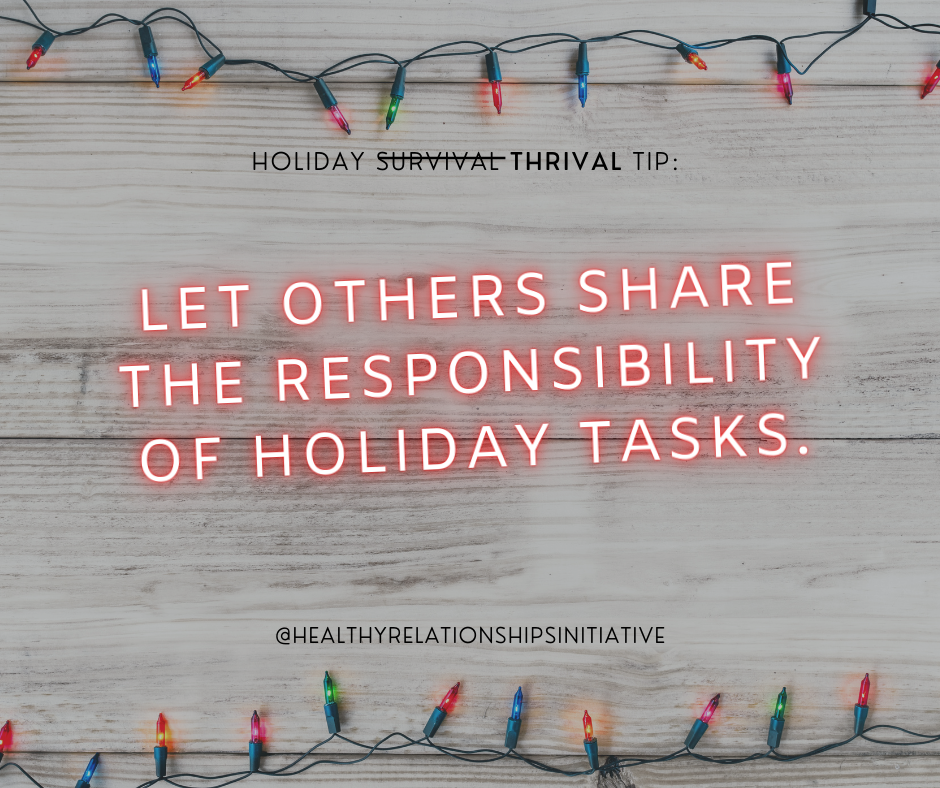
Minimize holiday stress by sharing the responsibilities of holiday tasks. It can be hard to let go of certain responsibilities or tasks, especially if you’ve taken them on in the past. But, letting go of certain duties can allow for other opportunities, such as to create new traditions of self-care, or to connect more intimately with a relative or friend. Take inventory of the many tasks you take on during the holidays and be honest with yourself about what you can let go of, and what you can delegate.
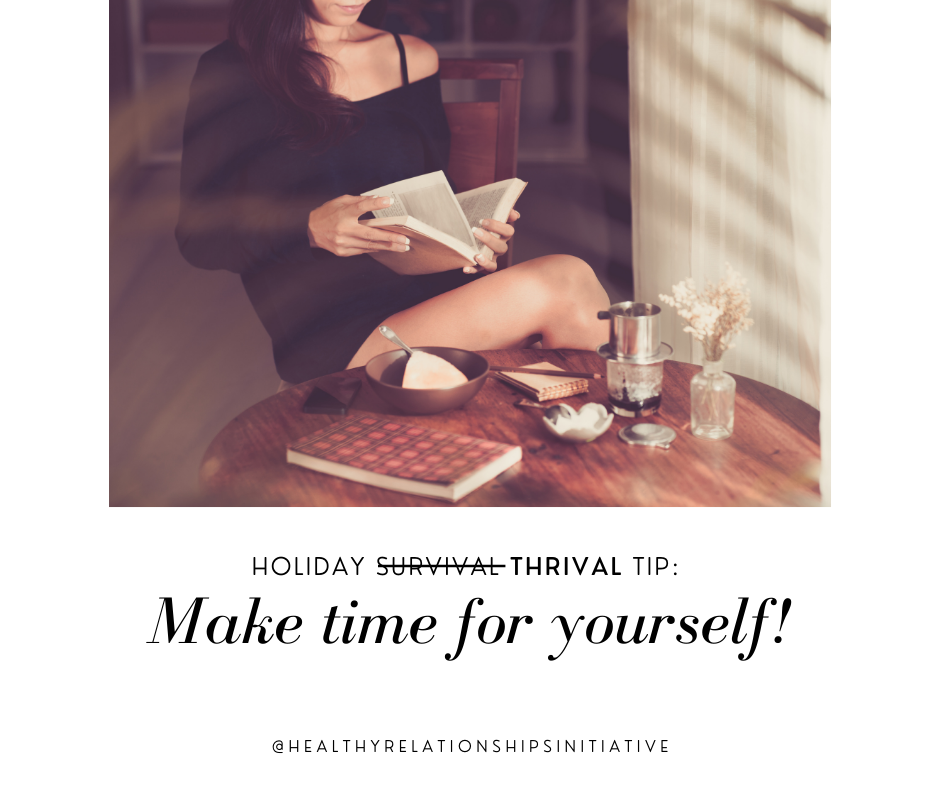
A big mistake that people often make around the holidays is that they focus so much on how they’ll spend time with others, that they don’t intentionally think about how to spend time caring for themselves.
A good way to curb holiday stress is to be just as intentional about what you will do for yourself during the holidays. Even if you spend a few minutes each day, or designate a weekly ritual or self-care activity, when we care for ourselves during the holidays, we can minimize stress and maximize the opportunities to bond with our loved ones.