Human Trafficking 101: Not in My Neighborhood: Series Intro

By Eleanor Beeslaar and Maria Harkins, Family Service of the Piedmont

We are excited to partner with Family Service of the Piedmont to spread awareness about human trafficking through this week’s blog series! Maria Harkins, the Human Trafficking Outreach Specialist at Family Service of the Piedmont, has collaborated with us to cultivate a blog series focused on educating our community about human trafficking and identifying ways in which we can help prevent human trafficking in Guilford County. 

Human trafficking may not be something that you think about very often. You may have heard someone you know briefly mention it or have caught a story about it in the news. Though it may not be something that crosses our minds regularly, human trafficking is a worldwide and complex issue that affects millions of men, women, children, and families every year.

Human trafficking is considered to be the third largest form of criminal activity in the world by the Federal Bureau of Investigation. According to the U.S. Department of Homeland Security, human trafficking “involves the use of force, fraud, or coercion to obtain some type of labor or commerical sex act.” It can occur in any community and victims can be any age, race, gender, nationality, immigration status, or socioeconomic status (1).

In 2018, there were 5,147 reported cases of human trafficking in the U.S., and North Carolina accounted for 126 of those cases, ranking it 10th amongst the states with the highest rates of reported cases (3). It is important to note that these numbers may be much higher than what is indicated by the research, as human trafficking is a hidden crime that often goes undetected and many cases are never reported.

There are different types of human trafficking, the most common being sex and labor trafficking (6). Sexual exploitation involves forcing, coercing, or deceiving an individual to engage in sexual acts against their will and without their consent. Forms of sex trafficking include prostitution, escort agencies, pornography, mail order brides, sex trouism, and much more (4). Labor trafficking can be defined as forcing or coercing someone to work for little or no compensation, and it often occurs under the threat of some sort of punishment (violence, accumulated debt, withholding identity papers, and exposure of immigration status to authorities). Victims of labor trafficking may be forced to work in a variety of industries including manufacturing, factory work, hospitality, construction, agriculture, or beauty services (4). Other forms of human trafficking include domestic servitude, forced marriage, and forced criminality (4). The breakdown of these types of exploitation is as follows:

  • Domestic servitude forces a victim to work within someone’s home for long hours with little or no pay. Individuals in domestic servitude may also experience physical and/or sexual abuse (4).
  • Forced marriage occurs when someone is pressured and/or forced to marry someone. They are often threatened with physical or sexual violence or experience psychological or emotional distress at the hands of the traffickers (4).
  • Forced criminality occurs when a victim of human trafficking is forced to engage in criminal activity such as pick pocketing, trading/selling drugs, selling counterfit goods, ATM theft, etc (4).

Being informed about human trafficking is an important part of keeping our community safe and helping individuals and families in Guilford County have happy, healthy, and safe relationships. Throughout the next week, we will be sharing information about how traffickers target and control victims, warning signs of human trafficking, what we can do to help victims and prevent human trafficking, and what resources are available to help victims of human trafficking. Stay tuned to learn more and help prevent human trafficking in our community!

References

  1. U.S. Department of Homeland Security. (n.d.). What is Human Trafficking? Retrieved from https://www.dhs.gov/blue-campaign/what-human-trafficking  
  2. Federal Bureau of Investigation. (n.d.). Human Trafficking/Involuntary Servitude. Retrieved from https://www.fbi.gov/investigate/civil-rights/human-trafficking 
  3. National Human Trafficking Hotline. (n.d.). North Carolina. Retrieved from https://humantraffickinghotline.org/state/north-carolina

  4. Stop the Traffik. (2019). Types of Exploitation. Retrieved from https://www.stopthetraffik.org/about-human-trafficking/types-of-exploitation/

  5. UNOCD. (2018). Global Report on Trafficking in Persons 2018. Retrieved from https://www.unodc.org/documents/data-and-analysis/glotip/2018/GLOTiP_2018_BOOK_web_small.pdf

Maria Harkins has over a decade of experience working directly with victims of Domestic Violence and Sexual Assault.  As a seasoned advocate she is passionate about human rights. She demonstrates this passion for helping women and children who have experienced domestic violence by providing support and helping them navigate the long road to recovery.  Maria also provides survivors with direct services tailored to their needs and community resources to further facilitate the recovery process. A native to Puerto Rico and fluent in both Spanish and English, Maria worked directly with the Latino and immigrant population. With an extensive background in human services she is now the Human Trafficking Outreach Specialist for FSP.  Maria is passionate about helping those who have been marginalized by society and are unable to help themselves. She is now a participating member of the Triad Rapid Response Team and Labor Trafficking Task Force.

She is presently a member of the American Association of University Women whose mission is to promote equity and education for women and girls. She also serves as a Board Member for Casa Azul of Greensboro, a non-profit organization that promotes Latin American Arts and Culture to increase the understanding of Latinos in the area and encourage community involvement. She was a Board Member for the Latino Community Coalition of Guilford whose mission is to strengthen and support the Latino community by providing advocacy and education through a collaborative and empowered network from 2013 to 2017. Maria has been honored as a Notable Latino of the Triad for her contribution to the Latino community 2013, 2015-2017.

She holds an Associate Degree in Business from Boston University, and a Computer Engineering Certification from Control Data Institute in NYC.  Prior to taking on the role of an advocate Maria worked for Digital Equipment Corporation in Massachusetts where she was one of the first women to work as a Computer Engineer. As one of the few female engineers to hold this position, she experienced push back from many of her clients who were used to working with male engineers.  These experiences are the driving force behind her passion and advocacy for the “Equal Pay for Equal Work” movement as well as women’s rights in the workplace in general.

Maria is a mother of two wonderful adult children. She loves music, art, dancing and travelling.  In her spare time, she enjoys spending time with her partner of six years, Wayne Epperly a local artist, visiting galleries and enjoying art. Her favorite quote is “In the winds of change we find our true direction”.
 

Talk About Long-Term Goals & Expectations

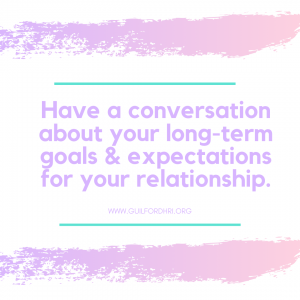
It’s important to think of the future and ensure that you and your partner’s vision and expectations for your relationship align. Have conversations about what you both want for the future of the relationship, including how long you plan on being long distance. When you communicate about each other’s goals and expectations for your relationship, you will feel more connected and have a stronger foundation for your relationship to continue to grow and thrive both during and after long distance.

For more information about communicating your goals and expectations for your relationship, check out our video!

Share Feelings & Overcome Conflict Over the Phone

An important part of thriving during long distance is to learn how to adapt to communicating in a new way. Because you may not see each other in person very often, it is crucial to be able to share your feelings and be vulnerable over the phone. When you are having serious conversations and bringing up challenging topics, try not to do so over text, as it is much easier for your words and intentions to get lost in translation. Instead, schedule a time to talk over the phone or video chat when having these conversations.

By being intentional and addressing you and your partner’s emotions – both the fears and joy – you can build intimacy and overcome challenges, which will build a strong foundation for your relationship to grow and thrive!

To learn more about communicating and overcoming conflict over the phone, watch our video!

Find Things You Can Do Together, While Apart

It is important to find ways to spend time together while you are apart to continue to build and strengthen your relationship. Although you are not physically together, there are many great ways to spend time together and create shared experiences from afar. Here are some things that you and your partner can do to build connection and spend time together during long distance:

  • Watch a movie or TV series together. You can do this by watching the same thing while on a video call. There are also apps and websites such as Rabbit, which allow you to watch a movie or TV series with another person through the app/website. This is a great way to share your interests and stay connected with your partner!
  • Read the same book. If you both like to read, you can take turns choosing a book to read at the same time. As you read, you and your partner can have conversations about the book you are reading, which can help you feel more connected and have fun while apart!
  • Plan a video chat date night! A great way to spend time together during long distance is to plan date nights over video chat, such as FaceTime or Skype.
  • Find online games you both like to play. If you and your partner enjoy video or computer games, a great way to spend time together and feel more connected is by playing multiplayer games together, while talking on the phone.
  • Listen to music together. Another way you and your partner can connect and spend time together during long distance is to share your favorite music with each other. You can create playlists for one another to listen to, helping you learn more about your partner and feel closer to one another.

We encourage you to try out some of these suggestions or to find other shared interests and activities that you can do together while you are apart!

Plan Visits Ahead of Time

Planning trips/visits ahead of time whenever possible is essential in long distance relationships. While you can continue to build connection and intimacy while you are apart, it is important to make sure that you are planning time to be together in person. Knowing when you will see each other in person again also gives you something to look forward to while you are apart. It can feel reassuring and comforting to know that you have a day on your calendar where you will see your partner again!

For more information about planning visits and other activities that allow you and your partner to spend quality time together, while apart, check out our video!

Trust and Be Trustworthy

Trust is key to thriving in a long-distance relationship. Though it may feel more challenging when you are apart, trusting your partner will not only strengthen your relationship, but it will also help you feel more at peace. Practice honesty and transparency to foster trust in your relationship. Talk to one another about your friends and family and keep each other updated about what’s happening in your lives. Be sure to communicate your fears, joys, failures, and successes; let each other in and be willing to be vulnerable. It’s much easier to trust and be trusted when you are open and honest with one another.

For more tips on how to trust and be trustworthy during long distance, watch our video!

Communicate Creatively

Technology is great for communication, especially in long-distance relationships, but we encourage you to get creative with your communication instead of solely relying on technology!

Try some of the following ideas:

  • Write a love letter and send it via mail.
  • Send a care package with your partner’s favorite snacks, a card, and a picture of you two together.
  • Deliver flowers.
  • Send them a book that you can both read at the same time.

By using one of the ideas above or a creative idea of your own, you are showing your partner that they are loved and valued. This will also foster increased gratitude, intimacy, and affection in your relationship.

Quality Communication

Long distance relationships rely on quality communication. Because you are not able to see each other as often as you would when living closer together, it is important to set aside time to talk. Though texting is a quick and easy way to stay connected with your partner throughout the day, we encourage you to spend time calling or video chatting for more quality communication that fosters intimacy and connection. When you are talking with your partner, be sure to try your best to stay in the present moment and make the most of your time together.

An important part of communicating effectively during long distance is setting realistic expectations about how frequently you will talk. If you both have very busy schedules or if you must work around a time difference, you may not be able to talk as often. However, it is still important to set aside times where you both know you will be available to ensure that your communication does not fall to the wayside.

Keep in mind that quality communication does not mean you always need to have serious conversations. It may look like video calling while you cook dinner or watch the same movie. Sometimes, just being connected while doing simple tasks that you would normally do together can help you feel closer and build intimacy.

Quality communication may also look different for each couple. A good rule to follow is to communicate as much or as little as you need to feel connected. Some couples may need to talk every day, while others may feel more comfortable with less frequent communication. Talk to your partner and figure out what works best for both of you to feel like your needs are being met in the relationship.

Some little things you can do to promote connection and communication in your long distance relationship include sending one another messages of gratitude, sending “good morning” and “good night” texts, and texting each other things you love about one another.

To learn more about communicating effectively during long distance relationships, watch our video!

Set Ground Rules

When entering into a long distance relationship, it is important to communicate your expectations and needs to one another. This will ensure that you are both on the same page and will help you avoid miscommunication about what your relationship will look like during long distance. It will also help you and your partner create an open line of communication to discuss what is working or what may need to change throughout your time as a long distance couple. Some questions you may ask yourselves may be:

  • How often will you communicate and what does that communication look like?
  • How often will you call/video chat?
  • When will you visit one another?
  • How long do you expect long distance to last?
  • What are your expectations for your relationship after long distance?
  • How will we handle arguments or other challenges during long distance?

Once you have communicated your expectations and needs to one another, set ground rules to help you manage these expectations and needs and maintain a healthy relationship. This may look like planning visits that you both can look forward to or setting aside certain times of the day where you call one another. It is also important to remember that your expectations and needs may change over time, so it is important to be flexible and communicate regularly about what is/isn’t working.

Check out our video about managing expectations during long distance relationships!