Have you ever wanted to reach out to a friend going through a particularly difficult time, only to put the phone down and hesitate out of fear of saying the wrong thing? Maybe you don’t even send the text or make the call at all. You overthink the conversation in your head and you decide not to reach out.
Consider an alternate view — You make the call and even if you say something silly or fumble over your words, you make your friend’s day by reaching out. You can hear them smiling through the phone and you smile back. You hang up and you know you’ve made a difference in their day. You feel a little happier, too.
Don’t let the fear of saying the wrong thing prevent you from reaching out to the people that you love. After all, that’s what makes certain friendships and relationships so special, or of that “dearer stuff.”
Presented by Dr. Christine Murray, Director of the Center for Youth, Family, and Community Partnerships and the Healthy Relationships Initiative, this training will provide an introduction to best practices for responding to family violence for mental health professionals.
Topics covered will include understanding the different forms of family violence, risk factors for abuse, mental health consequences of victimization, and an introduction to treatment approaches.
Participants will learn how to identify common features of abusive relationships, understand how mental health services fit within the range of other community resources for victims and survivors, and gain knowledge about how mental health professionals can support impacted clients in the long-term abuse recovery process.
This training is recommended for professionals and students. *UNC Greensboro alumni, staff, and students can received a discounted ticket by selecting the correct ticket and providing additional information.
This training has been approved for 4 NBCC credit hours, 4 NASW-NC credit hours, and 4 NCASPPB credit hours.
Responding to Family Violence: Best Practices for Mental Health Professionals has been approved by NBCC for NBCC credit. UNCG Center for Youth, Family, and Community Partnerships; the Healthy Relationships Initiative is solely responsible for all aspects of the program. NBCC Approval No. SP-3617.
This event will take place virtually on Friday, May 14 from 9-2 pm. Register and reserve your ticket and receive details to connect leading up to the program. In order to earn the appropriate credit hours for this program, you must attend the entire program from 9-2. Participants will also be required to remain engaged through both the enabling of their camera feature and also, by engaging in the chatroom throughout the program. Attendance will be taken in order to correctly distribute earned credit hours.
Please direct all inquiries to Camila at c_dossan@uncg.edu.
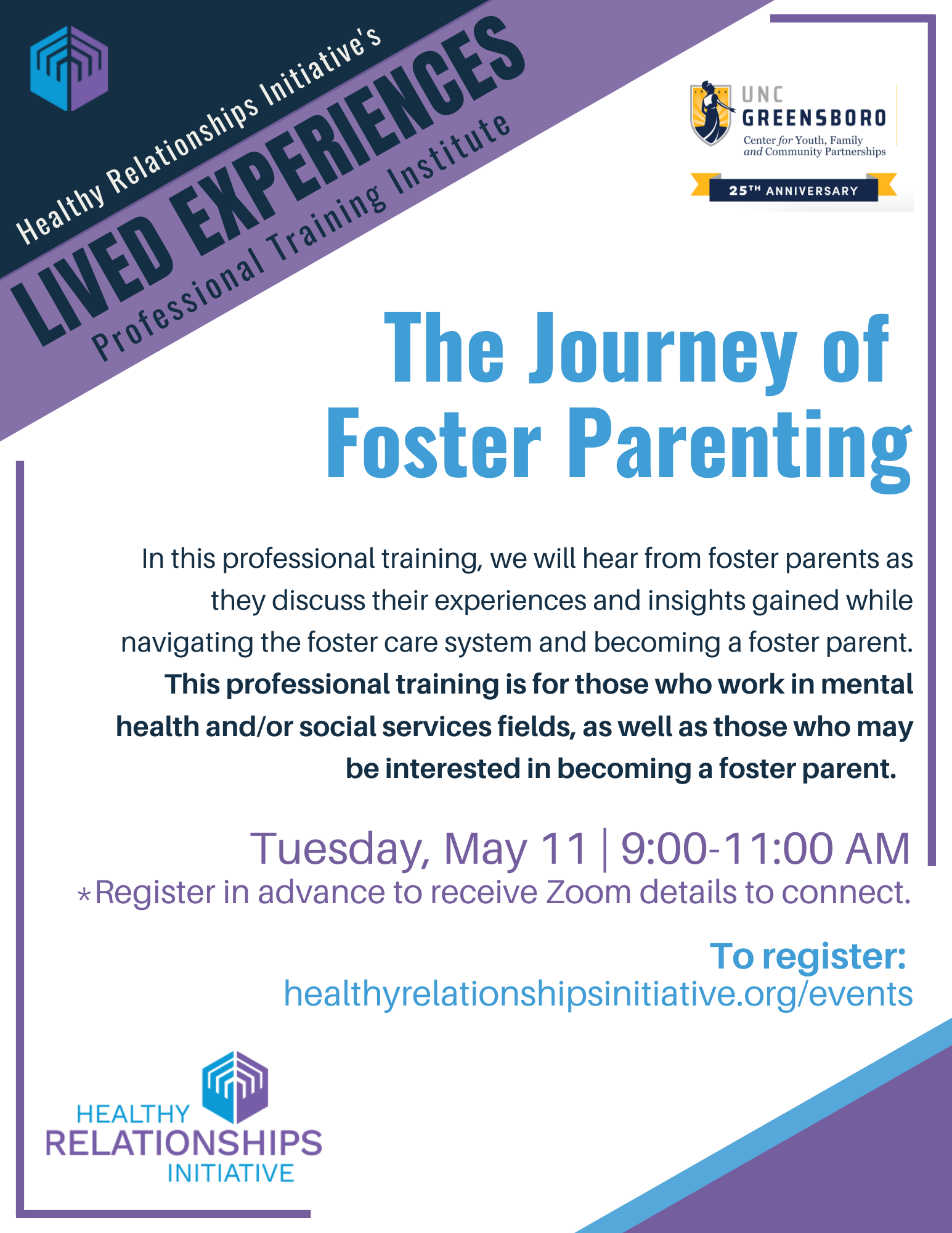
In this professional training, we will hear from foster parents as they discuss their experiences and insights gained while navigating the foster care system and becoming a foster parent. This professional training is for those who work in mental health and/or social services fields, as well as those who may be interested in becoming a foster parent.
Imagine you’re baking some cookies. As you prepare the cookie batter, you may change a few things up a bit in the recipe–who doesn’t like a few extra chocolate chips, after all? But, overall, you need to get the right mix of ingredients in the cookies, or they just won’t taste right. Have you ever added baking powder when you were supposed to use baking soda? Or too much salt? Now, I’m nowhere close to being a master chef, but I can tell you that food doesn’t turn out right when you don’t have the right ingredients in the recipe.
Relationships can be a lot like baking in that way. There are important ingredients to include in a relationship to help it become happy, healthy, and safe. When one or more of the important ingredients are missing from a relationship, the relationship can feel off, or it can start to deteriorate into having a lot of major problems over time. Just like a cookie doesn’t turn out right without the best mix of ingredients, relationships won’t turn out just right if we don’t put in the right mix of positive relationship ingredients.
What are these important positive relationship ingredients? As we’ve planned for the launch of the Healthy Relationships Initiative, we’ve thought carefully about what it means to have a “healthy” relationship. It is not our goal to suggest that there is one ideal way to have a healthy relationship! We know that the “recipe” for healthy relationships can take many forms, and people’s ideas about what makes a healthy relationship are impacted by many factors, including their cultural background, their religious views, and their past experiences.
We’ve worked to identify core features of relationships that we believe are relatively universally accepted as being a part of healthy relationships. We know that our list isn’t perfect–part of the beauty of relationships is that they are each unique, just like the people in them. However, we believe that these characteristics are common among healthy relationships, even across different backgrounds.
Join Fellowship Hall and the Healthy Relationships Initiative as we discuss how friendship is crucial to long-term recovery and wellness. This event will feature a panel of those with both professional and personal experiences with recovery and a discussion led by HRI Director, Dr. Christine Murray.
There is no advanced registration required for this event. To tune in on Tuesday, April 6, simply visit the HRI or Fellowship Hall Facebook page at 12:00 pm. Eastern Time.
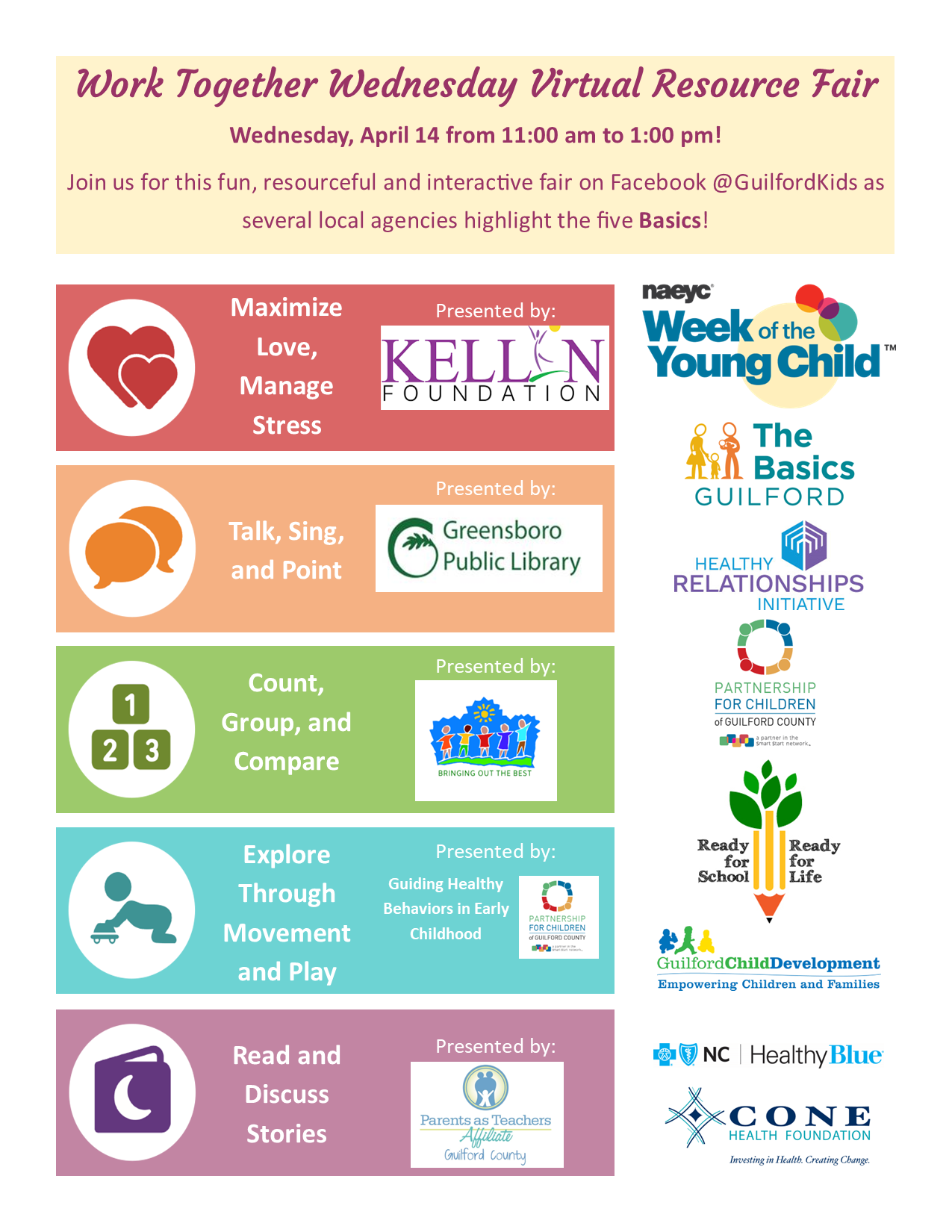
We’re excited to co-host this event in partnership with several Guilford County organizations on April 14, 2021 on Facebook Live! Join us from 11-1 or drop by at any time and learn about the resources available to families with young children in Guilford County.
An important part of having healthy and happy relationships is to maintain a positive view of your relationships, especially when times are tough or relationships are strained. One way to practice this reframing of your relationships is to practice daily affirmations. Affirmations can help us train our minds to view our circumstances more positively. Today, we’re sharing relationship affirmations to help you begin reframing your perspectives on your relationships today!
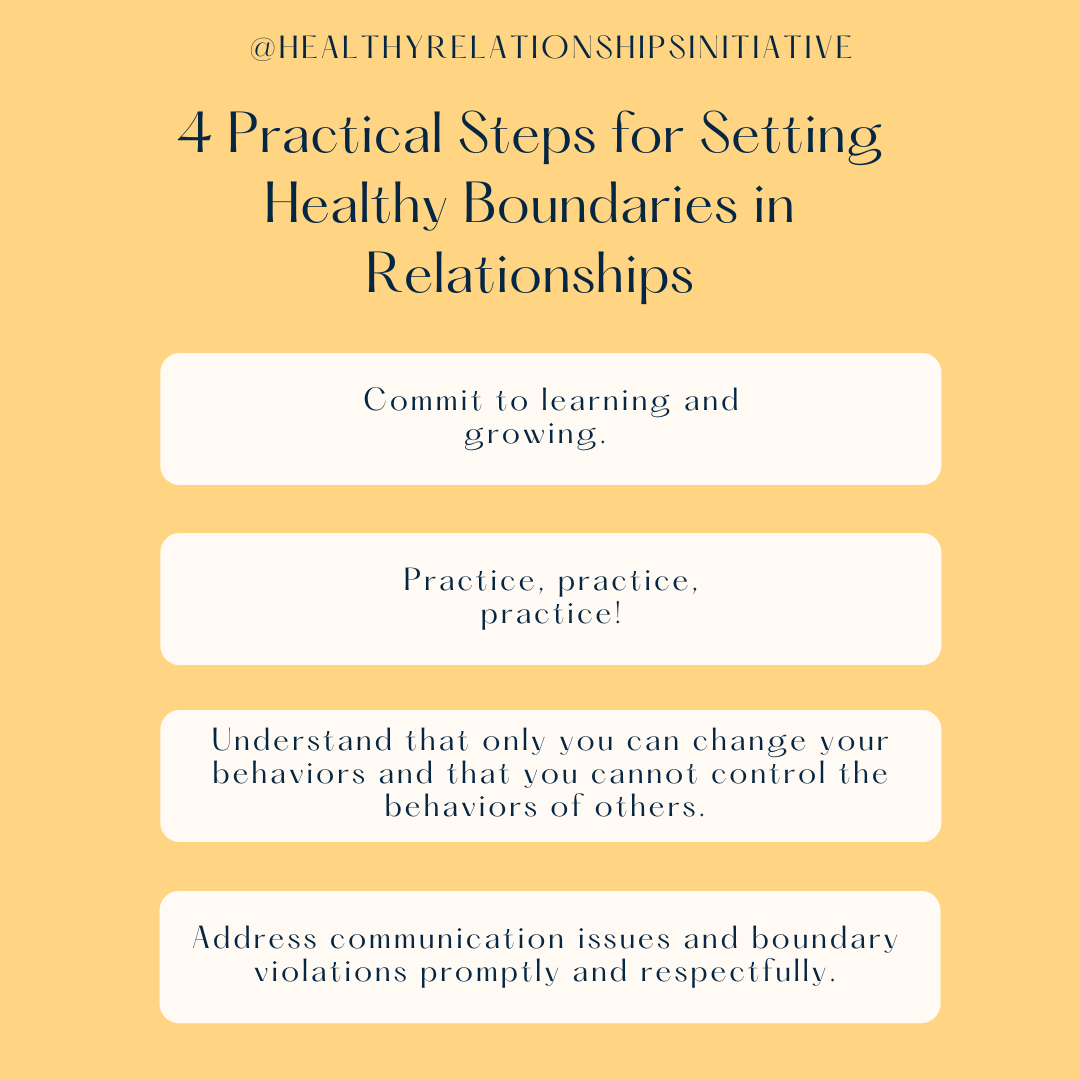
Boundaries often have a negative connotation, but when we use them appropriately, they can help us to strengthen our relationships and experience healthier, happier, and safer relationships overall. Today, we’re sharing 4 practical steps for setting healthy boundaries in relationships of all kinds.
Commit to learning and growing. All relationships require intentionality and constant effort in order to remain healthy, happy, and safe. When setting boundaries in relationships, it’s important to commit to learning and growing. Identifying the areas of your relationships that may need work can help you understand where you need to commit your effort to learning and growing new skills.
Practice, practice, practice! Like anything in life, to become good at setting boundaries, you have to practice, practice, practice! Practicing boundary-setting can look like: reminding yourself and those impacted of the boundary you’re setting and how they can help you enforce it, or holding yourself accountable for the boundaries that you set for yourself. Remember that perfection is not the goal, but consistency is!
Understand that only you can change your behaviors and that you cannot control the behaviors of others. It can be hard to accept this in our relationships, but when we understand that we cannot control the behaviors of others, it helps us to focus on the behaviors in ourselves that can help to change or impact a relationship for the better.
Address communication issues and boundary violations promptly and respectfully. Responding to boundary violations quickly and respectfully helps to hold yourself accountable, as well as others, for ensuring that your needs are met.
For more on setting boundaries in relationships, check out this pre-recorded program by HRI Director, Dr. Christine Murray, here.